
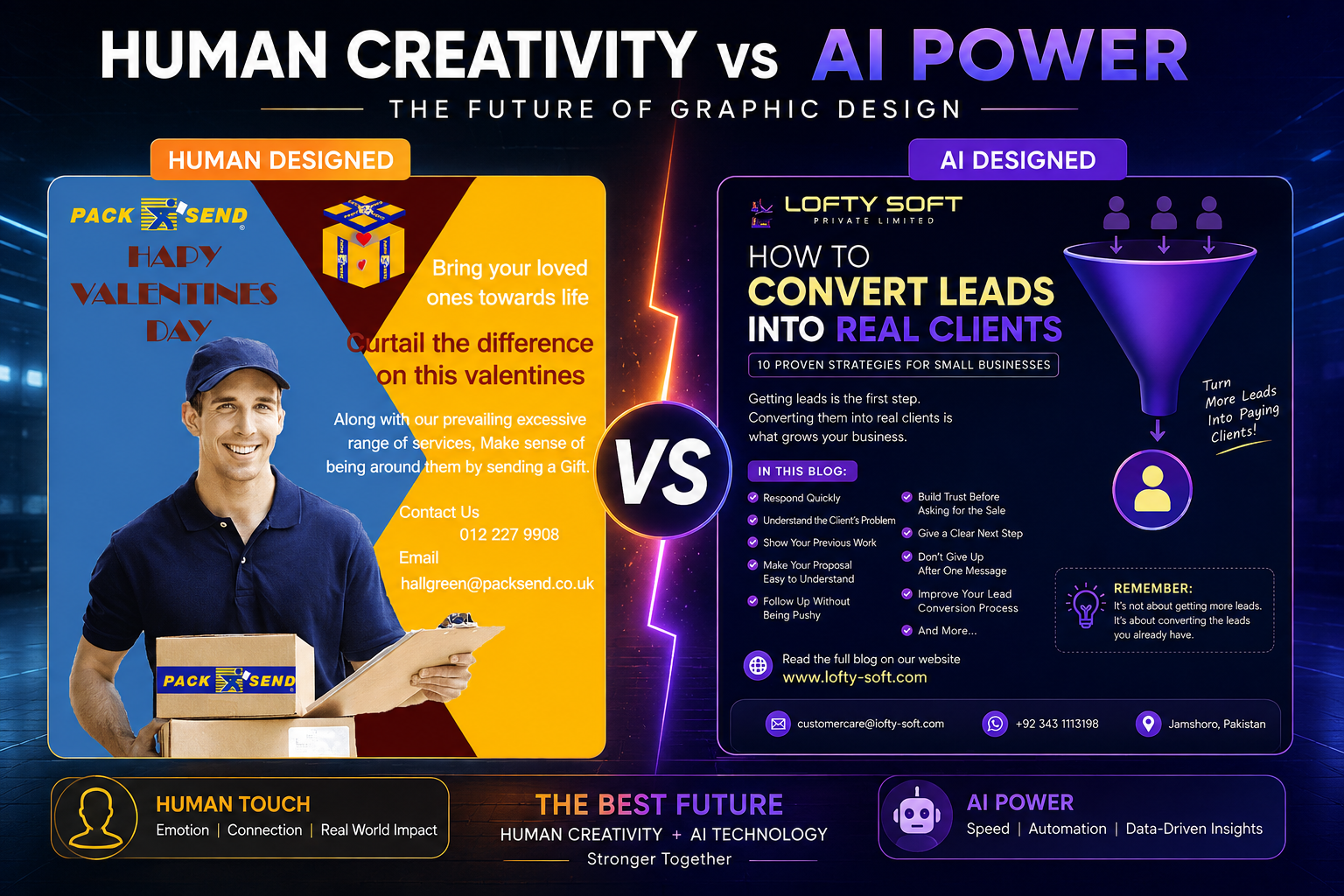
How AI Is Transforming Graphic Design: Will AI Replace Graphic Designers?
Artificial Intelligence is changing almost every industry, and graphic design is no exception. AI-powered image generation tools can now create illustrations, logos, marketing visuals, social media graphics, and creative concepts within seconds. This rapid development has raised an important question:
Will AI replace graphic designers in the future?
The simple answer is: AI will transform the role of graphic designers, but it is unlikely to completely replace human creativity.
The Rise of AI in Graphic Design
AI-powered tools have made graphic design faster and more accessible than ever before. With just a simple text prompt, AI can generate images, concepts, backgrounds, illustrations, and design ideas in seconds.
This technology helps businesses and designers save time, especially during the early stages of a project. Instead of starting every concept from scratch, designers can use AI to explore multiple creative directions quickly.
AI is becoming a powerful assistant for creative professionals rather than simply a replacement for them.
How AI Is Changing the Work of Graphic Designers
1. Faster Design Creation
One of the biggest advantages of AI is speed. Tasks that previously took hours can sometimes be completed in minutes.
AI can help designers create:
- Social media graphics
- Marketing visuals
- Image backgrounds
- Illustrations
- Product concepts
- Website graphics
- Creative design variations
This allows designers to spend less time on repetitive work and more time on creativity and strategy.
2. AI Makes Design More Accessible
Previously, creating professional-looking visuals often required advanced design skills and expensive software.
Today, AI tools allow small businesses and individuals to create basic graphics more easily. This means more people can participate in digital content creation.
However, creating a visually attractive image is not always the same as creating a successful professional design. Professional designers understand branding, color psychology, typography, audience behavior, and visual communication.
3. Designers Can Explore More Ideas
AI can generate multiple visual concepts quickly. This can help graphic designers during brainstorming.
For example, a designer working on a brand campaign can use AI to explore different visual styles before developing the final professional design.
Instead of replacing the designer’s imagination, AI can provide inspiration and speed up the creative process.
Will AI Replace Graphic Designers?
AI may reduce the demand for some simple and repetitive design tasks. Basic social media posts, simple backgrounds, and quick visual content can increasingly be created using AI tools.
However, professional graphic design involves much more than generating an image.
A skilled designer understands:
- Brand identity
- Target audiences
- Typography
- Color psychology
- Marketing strategy
- User experience
- Visual storytelling
- Business objectives
AI can generate an image, but it does not truly understand a client’s business goals in the same way a professional designer can.
The future will likely favor designers who know how to combine human creativity with AI technology.
The Future Graphic Designer Will Work With AI
The graphic designer of the future may use AI as part of their everyday workflow.
Instead of spending hours creating repetitive elements, designers can use AI to speed up certain tasks and focus on higher-value creative work.
Future designers may need skills such as:
- AI image generation
- Prompt writing
- Creative direction
- Brand strategy
- UI/UX design
- Motion graphics
- Digital marketing
- Human-centered design
The most successful designers will not necessarily be those who avoid AI. They may be the ones who learn how to use AI effectively.
AI Cannot Completely Replace Human Creativity
Human creativity is influenced by emotions, culture, personal experiences, and understanding of people.
A professional designer can communicate with a client, understand their vision, recognize problems, and make strategic creative decisions.
AI does not have personal experiences or genuine human emotions. It creates results based on patterns and information it has learned.
That is why human creativity will continue to play an important role.
Challenges Created by AI Imaging
Although AI provides exciting opportunities, it also creates challenges.
Some important concerns include:
Copyright and Ownership
Questions about who owns AI-generated images and how training data is used continue to be important issues.
Job Changes
Some basic design jobs may become less common as businesses use AI tools for simple content.
Quality and Accuracy
AI-generated images can sometimes contain mistakes, unrealistic details, incorrect text, or inconsistent elements. Human review is still important.
Ethical Use
Designers and businesses need to use AI responsibly and avoid misleading or harmful visual content.
The Opportunity for Graphic Designers
Rather than seeing AI only as a threat, graphic designers can see it as an opportunity.
AI can help designers:
- Work faster
- Generate more ideas
- Experiment with creative concepts
- Reduce repetitive work
- Improve productivity
- Offer new creative services
A designer who combines professional design knowledge with AI skills may have a strong advantage in the future job market.
Final Thoughts
AI is changing the future of graphic design, but it is not simply the end of graphic designers.
The industry is evolving.
Simple and repetitive tasks may increasingly be automated, but creativity, strategy, communication, and human understanding will remain valuable.
The future belongs to creative professionals who are willing to learn, adapt, and use technology as a powerful tool.
AI may not replace graphic designers—but graphic designers who effectively use AI may have an advantage over those who refuse to adapt.
At Lofty Soft, we believe that the future of technology is about combining human creativity with artificial intelligence to create smarter, faster, and more innovative digital experiences.
The Future Is Not Human vs AI — It Is Human + AI.
Artificial Intelligence is changing almost every industry, and graphic design is no exception. AI-powered image generation tools can now create illustrations, logos, marketing visuals, social media graphics, and creative concepts within seconds. This rapid development has raised an important question:
Will AI replace graphic designers in the future?
The simple answer is: AI will transform the role of graphic designers, but it is unlikely to completely replace human creativity.
The Rise of AI in Graphic Design
AI-powered tools have made graphic design faster and more accessible than ever before. With just a simple text prompt, AI can generate images, concepts, backgrounds, illustrations, and design ideas in seconds.
This technology helps businesses and designers save time, especially during the early stages of a project. Instead of starting every concept from scratch, designers can use AI to explore multiple creative directions quickly.
AI is becoming a powerful assistant for creative professionals rather than simply a replacement for them.
How AI Is Changing the Work of Graphic Designers
1. Faster Design Creation
One of the biggest advantages of AI is speed. Tasks that previously took hours can sometimes be completed in minutes.
AI can help designers create:
- Social media graphics
- Marketing visuals
- Image backgrounds
- Illustrations
- Product concepts
- Website graphics
- Creative design variations
This allows designers to spend less time on repetitive work and more time on creativity and strategy.
2. AI Makes Design More Accessible
Previously, creating professional-looking visuals often required advanced design skills and expensive software.
Today, AI tools allow small businesses and individuals to create basic graphics more easily. This means more people can participate in digital content creation.
However, creating a visually attractive image is not always the same as creating a successful professional design. Professional designers understand branding, color psychology, typography, audience behavior, and visual communication.
3. Designers Can Explore More Ideas
AI can generate multiple visual concepts quickly. This can help graphic designers during brainstorming.
For example, a designer working on a brand campaign can use AI to explore different visual styles before developing the final professional design.
Instead of replacing the designer’s imagination, AI can provide inspiration and speed up the creative process.
Will AI Replace Graphic Designers?
AI may reduce the demand for some simple and repetitive design tasks. Basic social media posts, simple backgrounds, and quick visual content can increasingly be created using AI tools.
However, professional graphic design involves much more than generating an image.
A skilled designer understands:
- Brand identity
- Target audiences
- Typography
- Color psychology
- Marketing strategy
- User experience
- Visual storytelling
- Business objectives
AI can generate an image, but it does not truly understand a client’s business goals in the same way a professional designer can.
The future will likely favor designers who know how to combine human creativity with AI technology.
The Future Graphic Designer Will Work With AI
The graphic designer of the future may use AI as part of their everyday workflow.
Instead of spending hours creating repetitive elements, designers can use AI to speed up certain tasks and focus on higher-value creative work.
Future designers may need skills such as:
- AI image generation
- Prompt writing
- Creative direction
- Brand strategy
- UI/UX design
- Motion graphics
- Digital marketing
- Human-centered design
The most successful designers will not necessarily be those who avoid AI. They may be the ones who learn how to use AI effectively.
AI Cannot Completely Replace Human Creativity
Human creativity is influenced by emotions, culture, personal experiences, and understanding of people.
A professional designer can communicate with a client, understand their vision, recognize problems, and make strategic creative decisions.
AI does not have personal experiences or genuine human emotions. It creates results based on patterns and information it has learned.
That is why human creativity will continue to play an important role.
Challenges Created by AI Imaging
Although AI provides exciting opportunities, it also creates challenges.
Some important concerns include:
Copyright and Ownership
Questions about who owns AI-generated images and how training data is used continue to be important issues.
Job Changes
Some basic design jobs may become less common as businesses use AI tools for simple content.
Quality and Accuracy
AI-generated images can sometimes contain mistakes, unrealistic details, incorrect text, or inconsistent elements. Human review is still important.
Ethical Use
Designers and businesses need to use AI responsibly and avoid misleading or harmful visual content.
The Opportunity for Graphic Designers
Rather than seeing AI only as a threat, graphic designers can see it as an opportunity.
AI can help designers:
- Work faster
- Generate more ideas
- Experiment with creative concepts
- Reduce repetitive work
- Improve productivity
- Offer new creative services
A designer who combines professional design knowledge with AI skills may have a strong advantage in the future job market.
Final Thoughts
AI is changing the future of graphic design, but it is not simply the end of graphic designers.
The industry is evolving.
Simple and repetitive tasks may increasingly be automated, but creativity, strategy, communication, and human understanding will remain valuable.
The future belongs to creative professionals who are willing to learn, adapt, and use technology as a powerful tool.
AI may not replace graphic designers—but graphic designers who effectively use AI may have an advantage over those who refuse to adapt.
At Lofty Soft, we believe that the future of technology is about combining human creativity with artificial intelligence to create smarter, faster, and more innovative digital experiences.